Lash Adhesive Troubleshooting: Solving Common Retention Problems
Retention issues almost always trace back to a handful of controllable factors. Here is how to diagnose and fix the most common lash adhesive problems.
Published by Cosmetic Glue Co
Even skilled lash artists hit adhesive problems — poor retention, extensions that will not bond, sudden white residue, or complaints of irritation. The good news is that almost every issue traces back to a small set of controllable factors: environment, technique, product handling and adhesive quality. This guide walks through the most common problems and how to fix them systematically rather than guessing.
Problem: poor retention
Retention is the most common complaint, and it is rarely caused by the adhesive alone. Before blaming the glue, check the pre-treatment: lashes must be cleansed and fully free of oil, makeup and protein. Insufficient cleansing is the single biggest retention killer. Next, check that you are using a genuinely fresh adhesive drop and replacing it every 15 to 20 minutes, as cyanoacrylate begins curing on the surface as soon as it is dispensed.
- Cleanse thoroughly with a lash shampoo and let lashes dry completely before application.
- Refresh your adhesive drop every 15 to 20 minutes.
- Ensure a proper attachment zone — the extension base must bond to the natural lash, not float.
- Reinforce aftercare: no water, steam or oil-based products for the first 24 hours.
Problem: shock curing (white residue)
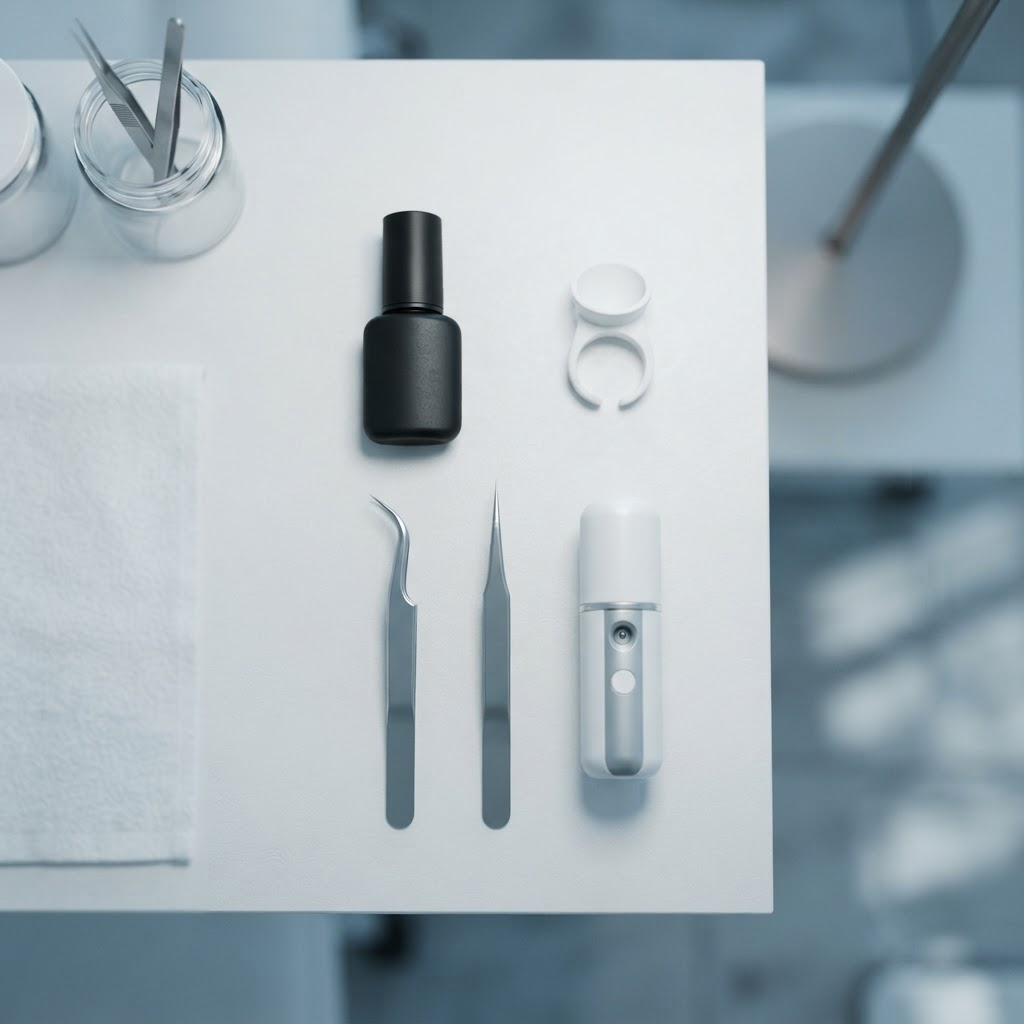
Shock curing appears as a white, crystallised residue on the bond and usually indicates that the adhesive cured too fast — most often from over-misting or applying too much moisture too quickly at the end of a set. Reduce the amount of water in your nano mister, hold it further away, and mist more gently. If your environment is very humid, switch to an adhesive with a slower cure rate.
Problem: humidity and temperature
Cyanoacrylate adhesives cure through reaction with moisture in the air, so humidity dramatically affects performance. Most professional adhesives specify an ideal humidity range (often 40 to 60 percent) and temperature band. Too dry and the adhesive cures slowly; too humid and it cures too fast, causing brittle bonds. A hygrometer and, where needed, a humidifier or dehumidifier are essential tools, not luxuries.
Always store adhesive as directed — usually cool, dark and airtight — and never in a fridge unless the manufacturer specifies it. Poor storage is a hidden cause of inconsistent curing.
Problem: fumes and irritation
Excessive fumes or client irritation can stem from using too much adhesive, poor ventilation, or a low-quality formulation. Use the smallest effective amount, ensure good airflow, and consider a low-fume adhesive for sensitive clients. Persistent irritation after a patch test may indicate a genuine sensitivity to cyanoacrylate, which is a medical matter rather than an application fault — never attempt to push through a reaction.
When the adhesive itself is the problem
If your technique and environment are dialled in and you still see inconsistent results, the adhesive may lack batch-to-batch consistency or may have degraded. Low-quality or poorly stored adhesives change behaviour between bottles, making results impossible to control. A regulated manufacturer with proper quality control produces adhesives that perform the same way every time, backed by safety data sheets and compliance documentation.
We manufacture BHA cosmetic-approved lash adhesives in UK and EU facilities with strict batch consistency, full compliance to EU Cosmetic Regulation 1223/2009, UK Cosmetic Directives and FDA MOCRA, and complete SDS documentation. We also provide samples so you can test retention and cure behaviour in your own environment before committing.
View our cosmetic adhesive range
Regulated, cyanoacrylate-based cosmetic adhesives with full safety documentation.